Electra
Observer: GDAA
Spectrum Data
FITS Header Metadata
Show FITS Header
| Key | Value |
|---|---|
| SIMPLE | True |
| BITPIX | -32 |
| NAXIS | 1 |
| NAXIS1 | 2971 |
| CRPIX1 | 1 |
| CDELT1 | 1.44750392926662 |
| CRVAL1 | 3691.50170898438 |
| CTYPE1 | Wavelength |
| CUNIT1 | Angstrom |
| SWCREATE | RSpec 2.1.1.18 |
| VERSION | RSpec 2.1.1.18 |
| OBSERVER | Grzegorz Duszanowicz |
| BSS_SITE | Sandvreten Observatory L11 |
| BSS_INST | T41 |
| OBJNAME | Electra |
| DATE-OBS | 2026-01-29T19:23:57 |
| EXPTIME | 330 |
| BSS_VHEL | 0 |
FITS Spectral Image
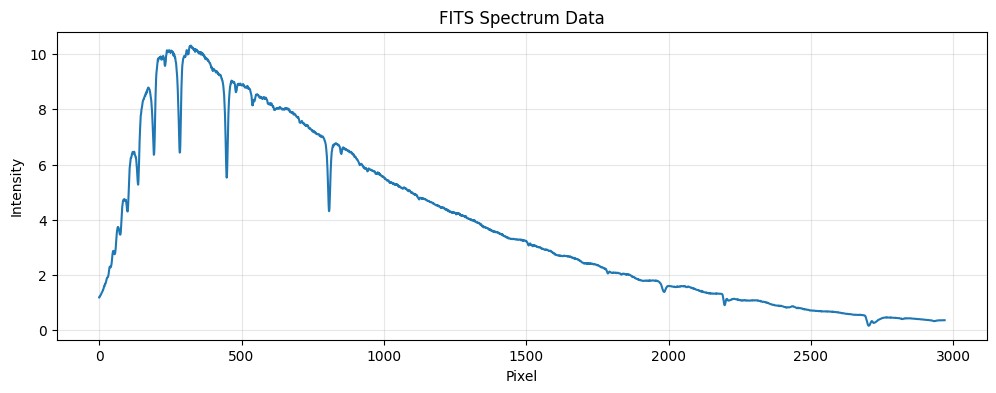
Click image to open in new tab for zooming
Calibrated Spectrum
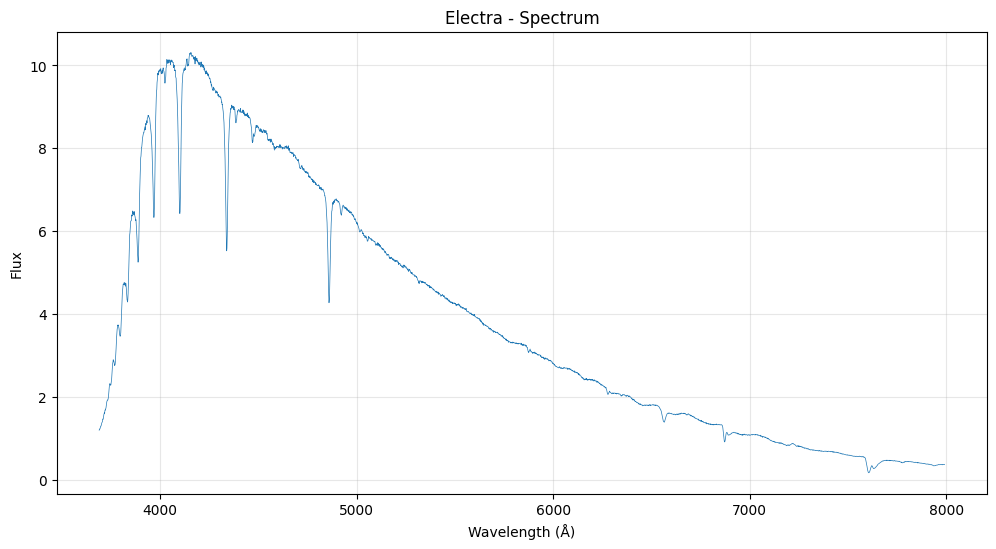
Click image to open in new tab for zooming
Observation Image
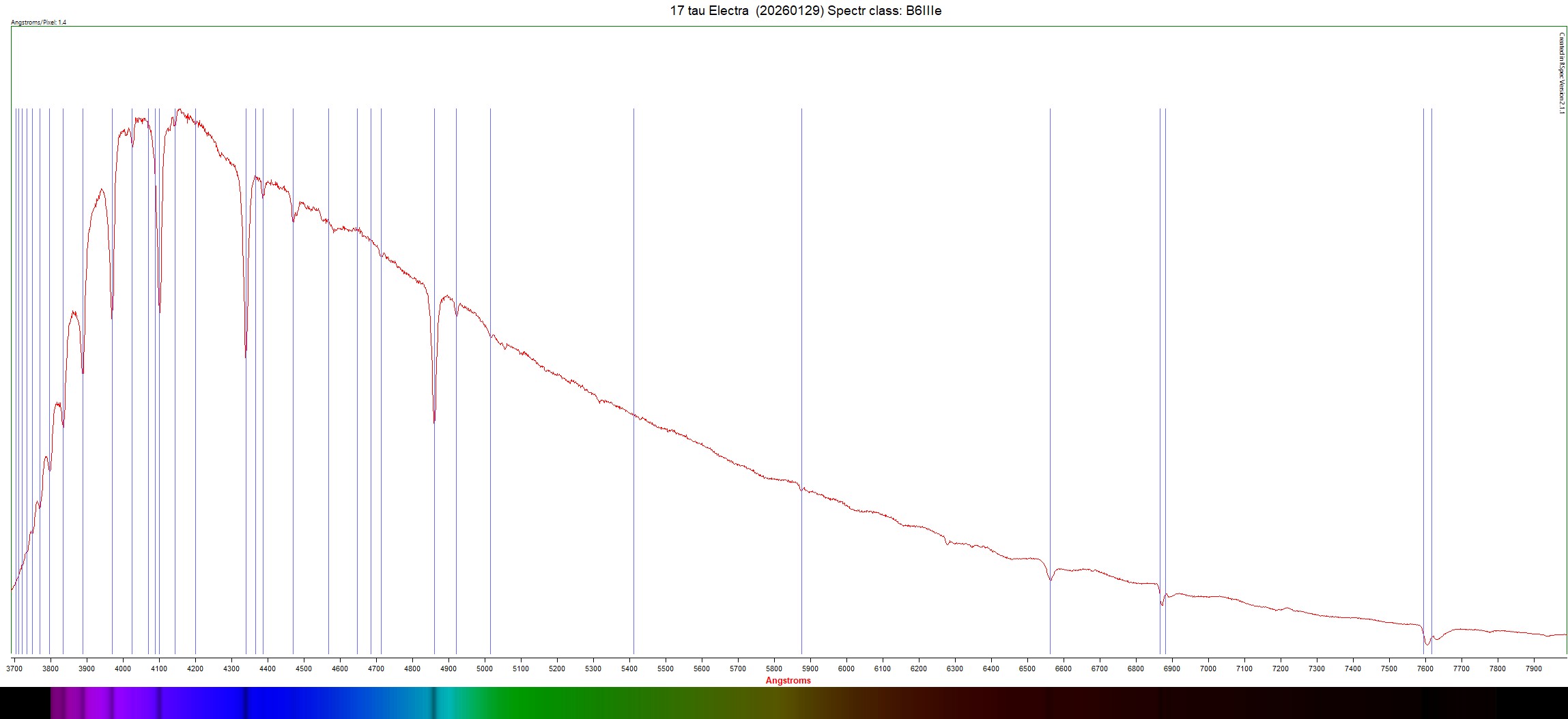
Click image to open in new tab for zooming
Metadata
| Field | Value |
|---|---|
| Object Name | Electra |
| Observer | GDAA |
| Site | Sandvreten Observatory |
| Equipment | T41 - Config 1 (200L/mm) |
| Observation Date | 2026-01-31 13:03 |
| Julian Date | 2461072.04375 |
| Created | 2026-01-31 13:03 |
| Updated | 2026-02-11 16:06 |
Notes
17 Tau. This is classified as a Be star, which is a B-type star with prominent emission lines of hydrogen in its spectrum.[3] The Be stars have a rotation rate that is 1.5–2 times the rotation of normal B-type stars. This high rate of rotation may allow mass loss during even minor prominences.[8] Changes in the radial velocity measurements indicate that this star may have a companion, which would make Electra a spectroscopic binary.[14][15] However, follow-up studies including interferometry have failed to confirm any companion star(s), so it is likely a single star.[16]