VV Cep
Observer: Grzegorz Duszanowicz (grzegorzd)
Spectrum Data
FITS Header Metadata
Show FITS Header
| Key | Value |
|---|---|
| SIMPLE | True |
| BITPIX | -32 |
| NAXIS | 1 |
| NAXIS1 | 2768 |
| CRPIX1 | 1 |
| CDELT1 | 1.44761617458552 |
| CRVAL1 | 3992.31420898438 |
| CTYPE1 | Wavelength |
| CUNIT1 | Angstrom |
| SWCREATE | RSpec 2.1.1.18 |
| VERSION | RSpec 2.1.1.18 |
| OBSERVER | HLAD |
| BSS_SITE | Sandvreten Observatory L11 |
| BSS_INST | T41 |
| OBJNAME | VV Cep |
| DATE-OBS | 2025-12-21T17:16:34 |
| EXPTIME | 900 |
| BSS_VHEL | 0 |
FITS Spectral Image
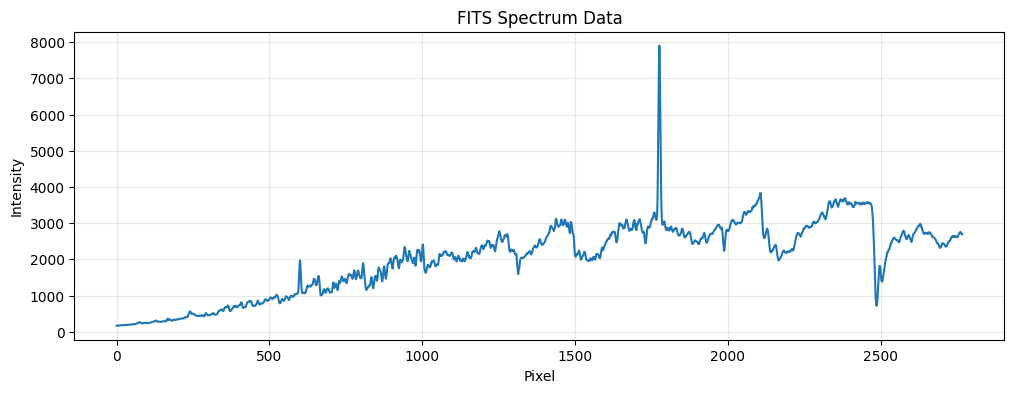
Click image to open in new tab for zooming
Calibrated Spectrum
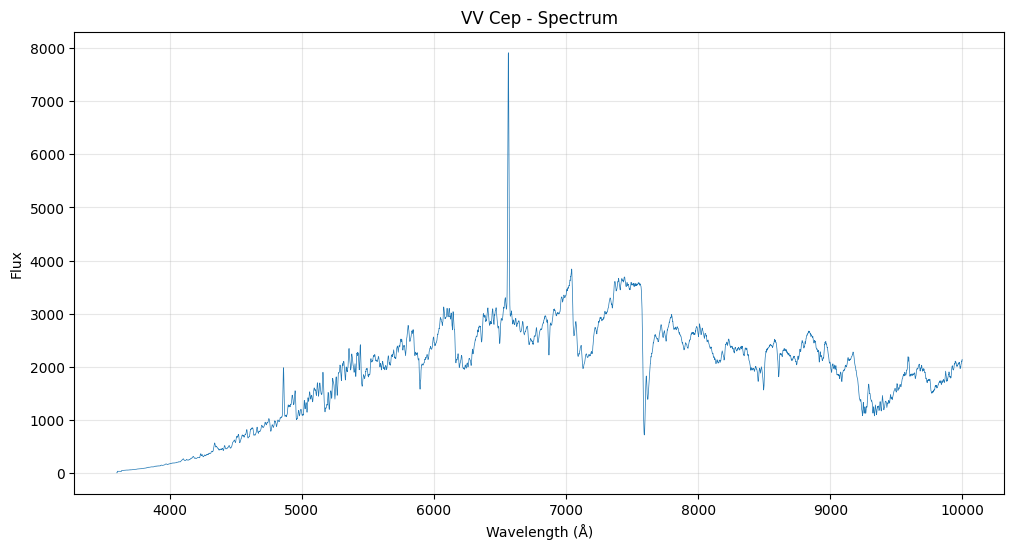
Click image to open in new tab for zooming
Observation Image
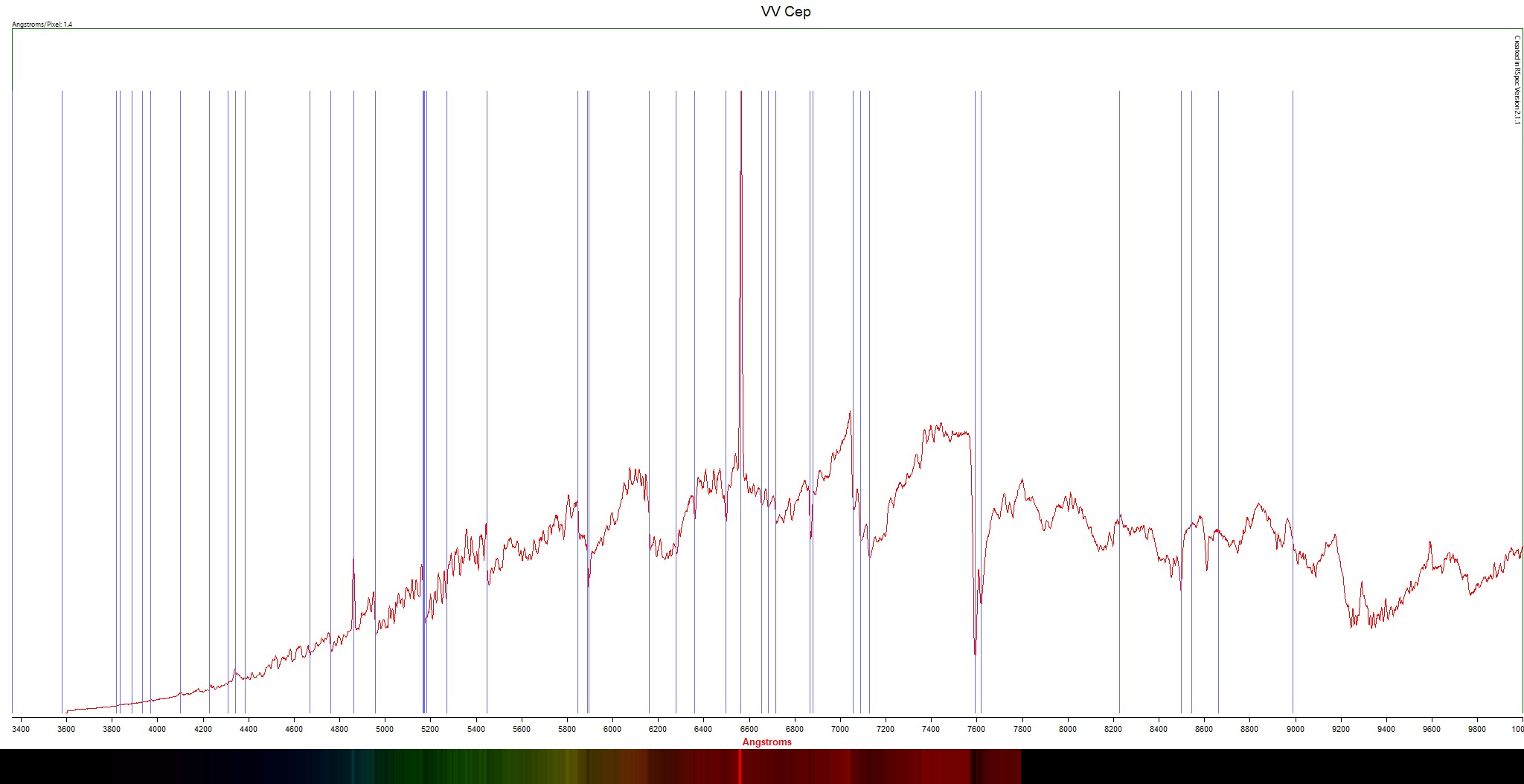
Click image to open in new tab for zooming
Metadata
| Field | Value |
|---|---|
| Star Name | VV Cep |
| Public | Yes |
| Created | 2026-01-04 10:16 |
| Updated | 2026-01-04 10:22 |
Notes
VV Cephei is an eclipsing binary with the third longest known period. A red supergiant fills its Roche lobe when closest to a companion blue star, the latter appearing to be on the main sequence. Matter flows from the red supergiant onto the blue companion for at least part of the orbit and the hot star is obscured by a large disk of material. The supergiant primary, known as VV Cephei A, is currently recognised as one of the largest stars in the galaxy although its size is not certain. Estimates range from 660 R☉ to over 1,000 R☉. The spectrum of VV Cep can be resolved into two main components, originating from a cool supergiant and a hot small star surrounded by a disk. The material surrounding the hot secondary produces emission lines, including [FeII] forbidden lines, the B[e] phenomenon known from other stars surrounded by circumstellar disks. The hydrogen emission lines are double-peaked, caused by a narrow central absorption component. This is caused by seeing the disk almost edge on where it intercepts continuum radiation from the star. This is characteristic of shell stars.[20] (Wiki)